- CARPENTER BEES NEST IN WOOD
- CARPENTER BEE FEMALES CAN STING
- CARPENTER BEE MALES CANNOT STING
- CARPENTER BEES LOOK LIKE BUMBLE BEES
- WHY ARE CARPENTER BEES A PROBLEM?
- HOW TO TREAT A CARPENTER BEE PROBLEM
- SO WHAT IS THE “BEST” CARPENTER BEE DUST?
- HOW TO APPLY DEMISE DUST
- HOW TO DUST CARPENTER BEE NESTS OUT OF REACH
- HOW TO STOP CARPENTER BEES FROM DRILLING NEW HOLES
- ORGANIC BEE REPELLENT AND PAINT ADDITIVE
- WOOD BEE KITS
- CONTACT US
- CARPENTER BEE PRODUCTS
Spring has sprung! Ornamental trees are blooming, flowers are growing and insects are awakening.
One such insect super active every spring and summer is the carpenter bee. Carpenter bees are prevalent throughout the United States and active in every state. Although there are different species, the most common is big and resembles a bumble bee. You may find it foraging around flowers, shrubs and under the eaves of buildings. This bee is unique from most because it will bore into wood to make its home. Carpenter bees are a nuisance and can cause damage to any wood on your property. They also bother homeowners by “attacking” them though they rarely sting. To keep your building free of carpenter bees, you must know their biology and habits.
CARPENTER BEES NEST IN WOOD
Carpenter bees bore holes into wood overhangs, fence posts, and trees used to lay eggs and essentially create nests. They will also crawl under the cracks of of homes siding and roofing to use these tight spaces for nests. When they bore in wood, the hole they drill is about 1/2″ wide and very round, much like one can make using a drill. This hole will go in straight an inch or two and then turn 90 degrees. The following video shows close up a freshly drilled hole with a female carpenter bee just inside.
Just off the main corridor, females will bore segments used as egg chambers. Eggs are laid at the end of these chambers and many times in “sub” chambers which can develop over time when nests have been recycled.
Females with then gather food and store it alongside the egg. These chambers are then capped and sealed tight. It is common for a nest to be two or more feet long with 10 or more sub chambers. Here is what a typical carpenter bee nest would look like from the outside.
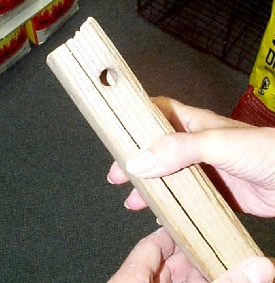
And if you could peer inside the hole, the drilled out chamber would look like this.
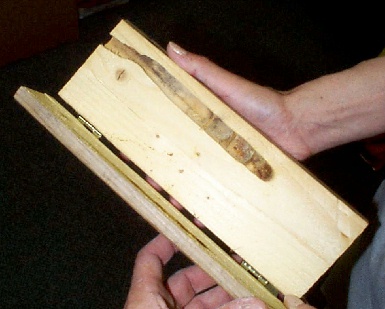
CARPENTER BEE FEMALES CAN STING
Typically the female carpenter bee will do all the drilling and nest maintenance. At night she will stand guard at the nest entry hole. She will defend the nest aggressively and females are armed with a stinger.
Once her drilling is done, she will spend her days foraging for food. You may find her working Azaleas, Bradford Pears, Daffodils, Pansies and any plant that might provide pollen used to feed her brood.
CARPENTER BEE MALES CANNOT STING
Male bees will be hanging around the same plants females use hoping to find a receptive female who is interested in finding a mate. The male bees are naturally curious and will buzz around anything including people, pets and most anything they see moving. This buzzing scares people into thinking they are being “attacked”. Ironically the male bee does not have a stinger and is completely harmless. He has a distinctive yellow face, which may be seen while he is in flight; females have a solid black face and will not be interested in people or pets.
CARPENTER BEES LOOK LIKE BUMBLE BEES
Female bees are less likely to be seen and for the most part, spend their time working on nests and collecting food. For this reason they will routinely be active where bumble bees forage. And since the two look similar, its easy to confuse a carpenter bee with a bumble bee but there are two main differences.
First, carpenter bees are generally larger.
Second, carpenter bees have an abdomen which is shiny, metallic and black in color. Their abdomen has no body hair. Bumblebees have yellow and black body hair on all body parts. The following video shows a female carpenter bee closeup as she is chewing an entrance hole to a newly formed nest. Note her shiny metallic abdomen (bottom half of her body).
WHY ARE CARPENTER BEES A PROBLEM?
In addition to “attacking” people and pets, carpenter bees are a problem because they will readily return to the same wood or location where they were born. Old nests are used year after year and offspring will often times construct nests alongside old nests. For this reason a single nest one year will become two or three the following year. Problems rapidly escalate and soon you may have hundreds of holes.
CARPENTER BEE LARVAE ATTRACT PREDATORS
When you have numerous carpenter bee nests, you will have numerous larva. The larva of carpenter bees is large, noisy and “nutritious”. They make enough noise to attract a range of predators including woodpeckers. Buildings which have woodpeckers damaging exposed wood probably have some type of larval activity one of the most common larvae found to attract damaging birds is the young carpenter bee.
HOW TO TREAT A CARPENTER BEE PROBLEM
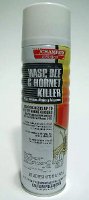
To get rid of carpenter bees, you must think long term. The nuisance male bees are easy to kill with BEE AND HORNET FREE.
To use this approach efficiently, you’ll need to get as close to them as possible and then spray directly at them making sure to keep the spray on them as long as it takes to knock the out of the air. This is will generally take a good 3-5 seconds.
Bee and Hornet Freeze is fast working and will control any large wasp, bee or other insect. It can reach up over 20 feet and works immediately providing fast relief when the local numbers hanging around are too high so use some to reduce foraging males seeking a mate.


Unfortunately, killing the male bee will do nothing to stop the local infestation or to break the cycle of bees coming back to your home to nest. So to accomplish this goal, you’ll need to treat the nest with a material which will last a long time. This ensures it will be around when larvae hatch which might not happen for 6-12 months (depending on where you reside). Remember, the eggs are buried deep in the nest and are well protected so liquids will not kill them. This means to get a long term “permanent” solution, you’ll need to use an agent that will last for many months after its been applied. For this reason, you’ll need to use a dust and not any kind of dust will do.
SO WHAT IS THE “BEST” CARPENTER BEE DUST?
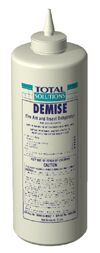
To insure complete control, you’ll want to use DEMISE DUST. This light “talc like” dust has a desiccant (dehydrating) action allowing it to work mechanically on target pests. So when applied into a live nest, it will quickly kill any adults inside. But because it can last for over a year, hatching larvae will fall victim to it as well.
To treat any nest, you’ll need to puff Demise into the hole giving the applicator a good 3-4 squirts. This is easy to do and will take 2-3 seconds.
The small 6 oz size is enough to treat 25-50 holes. The 1 lb jar is enough to treat 50-100 holes. Once dusted, leave the holes open for one day to ensure you get all the bees using the nest.
Dusting in the evening after dinner is a great time to do the work as it ensures the bees are in the nest and settled for the night. And once dusted, the following evening you should cork them with our 1/2″ CORKS. These are tapered and can be “pushed” into most any siding, fence, log, etc. You can hammer them in for a super tight fit and you can either paint or stain over them too.
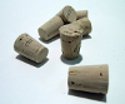
*** DO NOT SEAL CARPENTER BEE HOLES WITH CAULKING ***
Plugging the holes with a cork is the only way to ensure the nest will be “open” for emerging larvae. This way once they exit their protected chambers, they’ll surely crawl through the Demise and kill themselves.
Using some kind of “silicone” is a huge mistake as is any other kind of wood filler so do not use either. The problem with filling the tunnels with a sealant is that emerging young will not be able to move over the Demise or even use the old tunnel at all. This will force them to drill new exit holes which could lead into the home or some other location that’s hard to see or treat. To avoid this complication, do not seal the holes but instead cap them with corks above and allow the tunnels to stay “open” inside the main chamber.
Lastly, the other benefit of using corks is that they will enable you to tell which holes have been treated and which (if you start finding new holes) were created after you last dusted.
HOW TO APPLY DEMISE DUST
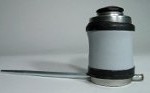
Since carpenter bee holes can penetrate several feet, you will need to use a special applicator to “puff” the dust into their entrance and a good unit for the job is the CRUSADER HAND DUSTER. This tool has a small rubber cap you’ll remove and then fill about 3/4 of the way with dust before using it. All it will take is 2-3 puffs to get the job done so there is no need to “fill” the nest with Demise. Once dusted, expect to hear bees buzzing before falling out opf the nest to die.
The following video shows how to dust a hole and what to expect after its received a good dose.
HOW TO DUST CARPENTER BEE NESTS OUT OF REACH
If you have a lot of holes to treat, consider getting the DUST-R. This device holds almost a whole pound of Demise and because of it’s unique pump handle design, requires very little effort to treat a hole. For large jobs, it’s a real help. Nests can be treated in a couple of seconds.
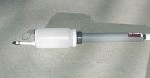
If the holes are out of reach, use the LONG REACH DUST-R which is essentially the same type of duster as the Dust-R except it has a series of extensions that lengthen the unit to over 7 feet long. This means the average person standing on the ground can treat nests over 12 feet high without the use of a ladder. And because it has a large holding tank, you won’t have to refill it frequently.
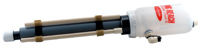
If you have to treat 15 -40 feet up, consider getting a DUSTICK or the DUSTICK DELUXE KIT. These dusters use a series of extensions each 4 feet long which “slide” over one another. Each kit comes with 4 along with a DUST CANISTER TOP and a PUMP MECHANISM. The Dust Canister fits over the top pole and holds the Demise. The Pump slides into the bottom pole and is used like a bicycle pump to “blow” the dust out of the dust canister up top. This configuration will be over 20 feet long and can be used to access nests which are over 25 feet high.
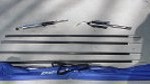
The Dustick Deluxe has all the components as the standard dustick but also includes the AEROSOL TOP and a SCRAPER used to remove mud dauber nests, paper wasp nests, bird nests, etc.
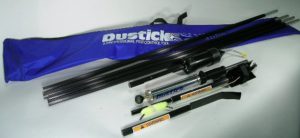
If you need to reach nests up over 25 feet, add 4 FOOT EXTENSIONS as needed.

The following video shows the Dustick in use:
HOW TO STOP CARPENTER BEES FROM DRILLING NEW HOLES
Once a home gets just one carpenter bee nest, its more likely to get more in the future. The reason this happens is complex.
First, existing holes will release pheromones and other odors which tell nearby females your home is a good location on which to nest. These same smells are what lure male bees to the area. The good news is that a thorough dusting with Demise will dramatically remove these smells. But ensure it helps as much as possible, dust under all siding and other cracks and crevices and not just the holes you see. This effort will really help reduce the amount of new bee activity.
Second, bees which were born in nests on your home are pre-wired to use the same area they were born on to either use old nests or build new ones. So if one hole generate 5 females, you could end up with 5+ holes in the second year of the infestation.
Third, if you home gets a nest its because carpenter bees are naturally drawn to the home in the first place.
For all of these reasons, homes which get just one nest are likely to keep getting them even after you dust so to make sure this doesn’t happen, you’ll need to spray the exterior of your home 1-2 every spring with MAXXTHOR EC
This active is highly repellent to most any insect and is especially bothersome to carpenter bees.
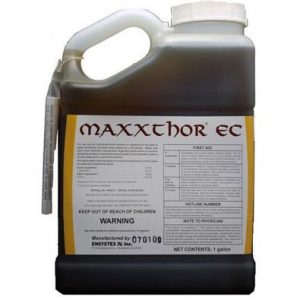
Maxxthor: www.bugspraycart.com/insecticide/liquid/maxxthor_ec.html
Mix it at the rate of 1 ounce per gallon and apply the gallon over 500-800 sq/ft. This application rate works well when treating cedar homes and log cabins too. These structures are particularly subject to carpenter bees so you’ll need to treat all surfaces under the overhang of the roof. On traditional homes made brick, you can generally focus your attention on the soffits and trim boards. But on vinyl or aluminum siding, you may have to spray all surfaces if the bees have been foraging under the covering.
Spray the home using any standard PUMP SPRAYER. Our sprayer can reach up to 20 feet so for single level homes, it can usually handle the job well.
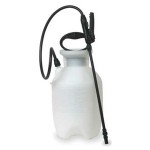
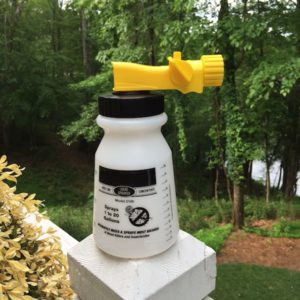
To reach higher heights, use our HOSE END SPRAYER. This sprayer uses the power of your garden hose and in most cases, will be able to reach up 30 feet or more.
ORGANIC BEE REPELLENT AND PAINT ADDITIVE
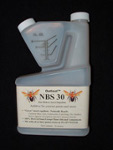
If you prefer an “organic” solution which won’t injure any insect yet still keep them off treated surfaces, go with NBS REPELLENT.
Made from essential plant oils, this 100% natural product isn’t a pesticide and won’t kill any insect so you’ll still need to dust with Demise to control existing populations.
But like the Cypermethrin, bees don’t like NBS (neither do wasps and other invasive insects) and will avoid siding, fencing, railing, decks, logs, overhangs and soffits where NBS is applied.
NBS is more commonly used by adding it to house paint or stain. Use 1 pint per 5 gallons of paint or stain to get a 1-2 years of repellent protection from the finish.
NBS can also be mixed with nothing but water and sprayed using any of the sprayers listed above the same way you can apply Cypermethrin. When used in water, the residual will be a lot less compared to when it’s mixed with paint or stain so you’ll need to apply throughout the season by treating every 1-2 months.
In summary, when using NBS as a paint or stain additive, add 1 pint to 5 gallons of either. When using it in water as a general surface spray, add 3 oz per gallon of water and spray the mixture over 500-800 sq/ft of surface area. Retreat one a month to keep the treatment active; more frequently if bees return sooner.
WOOD BEE KITS
If treating for wood bees is new task for you and you’re not equipped with some of the basic tools you’ll need, we have put together several wood bee “kits” that can help.
These essentially combine several of the products listed above into one “sku”. These will help by combining the needed dust, equipment and liquid spray to treat anything from a small problem right on up to the major infestation. There are basically 4 kit types with Kit 1 good for 5-10 nests, Kit 2 good for up to 25 nests and Kit 3 good for 50-100 nests. See which kit is best for you by reviewing the included components.
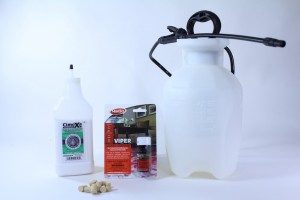
Wood Bee Kit 1 is good for treating small problems and includes enough dust to treat up to 10 holes. It comes with a pump sprayer that can reach 10-15 feet, 1 oz of concentrate for 1 gallon of mixed solution, 4 oz of dust and 10 corks. It can be shipped to all states except CA, CT and NY.
^^^^^^^^^^^^^
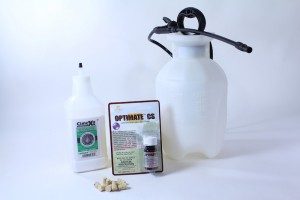
We also have this kit with a slight different concentrate that can be shipped to any state so order this if the ship to address is in CA, CT or NY.
^^^^^^^^^^^^^
Kit 2 is a bit larger and well suited for anyone needing to treat 20-25 nests. It includes the same sprayer as kit 1 but more concentrate (4 oz), more dust (6 oz) and 25 corks. This kit can be shipped anywhere but CA, CT and NY.
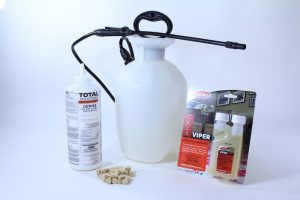
^^^^^^^^^^^^^
We also have this kit with a slightly different concentrate we can ship to any state.
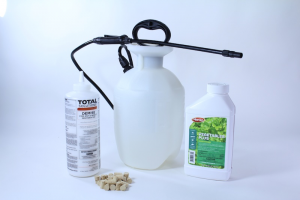
^^^^^^^^^^^^^
Kit 2 w/Duster is basically the same as the two kit 2’s above but these include a really nice hand duster. This device allows you to apply the dust using the included 12″ extension which is handy for nests just out of reach. This kit can be shipped to any state except CA, CT and NY.
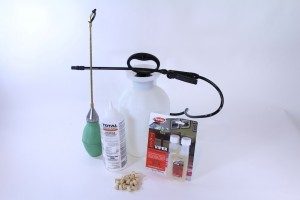
^^^^^^^^^^^^^
This kit is also available with the concentrate we can ship to any state.
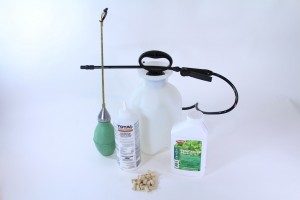
^^^^^^^^^^^^^
Kit 3 is large enough to control 50-100 nests and includes our very own Bugspray Sprayer which is more powerful compared to the unit included above. This kit also includes a full 1 lb jar of dust, a hand duster, 100 corks and 16 oz of concentrate enough to make up 16 gallons of mixed material. This kit can be shipped to all states except CT and NY.
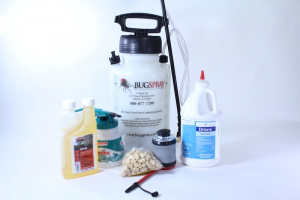
^^^^^^^^^^^^^
We also offer this kit with the CB Duster with 12″ extension (not available to CT or NY).
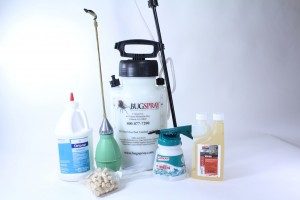
^^^^^^^^^^^^^
For CT or NY, we offer these two kits with a similar concentrate we can ship to your state.
This one includes the “standard” duster and can be shipped to any state.
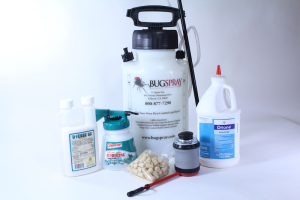
^^^^^^^^^^^^^
This one includes the CB Duster with 12″ extension and can be shipped to any state.
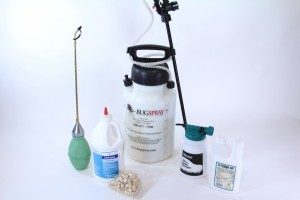
^^^^^^^^^^^^^
Lastly, our Kit 4 is basically the same as Kit 3 but instead of containing a pump sprayer or hose end sprayer, this kit includes our Trombone Sprayer. This sprayer is well suited for reaching heights of 30 feet or more. Keep in mind it is manually powered as the video here demonstrates:
If you need a portable sprayer that can reach up 30 feet or more, either of the following kits will be the one incuding the Trombone sprayer.
The first kit, kit 4A, can be shipped to every state except CT or NY.
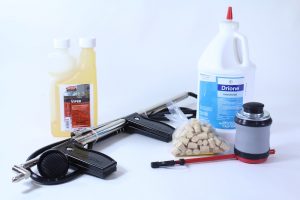
^^^^^^^^^^^^^^
The second version of this kit includes a concentrate we can ship to any state.
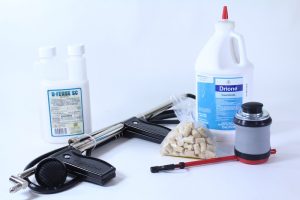
On a side note, we feel its important to point out the kits which include a concentrate we can ship to any state will work as well as any other kit that’s “restricted” to some states so you are not sacrificing performance nor will you get any less than stellar results no matter what kit you choose. Just be sure and get one large enough to handle your problem.
CONTACT US
Give us a call if you need further help. Our toll free is 1-800-877-7290 and we’re open Monday through Thursday, 8:00 AM to 7:00 PM. On Friday, 8:30 AM to 5:00 PM and on Saturday, 9:00 AM to 2:00 PM (Eastern Standard Time).
Email questions here: www.bugspray.com/about-us/contact-us
Order online and get a 5% discount! We ship fast with 99.9% of all orders shipping within 1 business day!!
Learn more about BUGSPRAY.COM and why it’s never been easier or safer to do your own pest control.
Please show your support for our business by purchasing the items we recommend from the links provided. Remember, this is the only way we can stay around to answer your questions and keep this valuable web site up and running. Thanks for your business!
CARPENTER BEE PRODUCTS
Here are direct links to all the products listed in our article:
Wasp Freeze: https://www.bugspraycart.com/insecticide/aerosol/pt-515-wasp-freeze-18-oz
Hornet Killer: https://www.bugspraycart.com/insecticide/aerosol/bonide-wasp-and-hornet-killer
Demise Dust: www.bugspraycart.com/insecticide/dust/drione-demise-dust-6-oz
Corks: https://www.bugspraycart.com/equipment/equipment-plugs/cork-12
Hand Duster: https://www.bugspraycart.com/equipment/dusters/crusader
Dust R: https://www.bugspraycart.com/equipment/dusters/bg-1152-a-qt-duster
Long Reach Dust R: https://www.bugspraycart.com/equipment/dusters/bg-long-reach-dust-r
Dustick: https://www.bugspraycart.com/equipment/dusters/dustick
Dustick Deluxe: https://www.bugspraycart.com/equipment/dusters/dustick-deluxe-kit
Maxxthor:
Sprayer: www.bugspraycart.com/good/pump-sprayers
Insect Repellent: https://www.bugspraycart.com/exempt/additive/nbs-paint-additive-16-oz
Bill Snapp says
What kind of paint or sealer can I use to prevent them from boring holes?
admin says
If you view the very first video in the article above, you’ll see a carpenter bee queen drilling through a wood railing that’s been painted with Duron Exterior Paint. Made by Sherwin-Williams, their Duron paint line is one of the best exterior paint products on the market. It’s tough as nails yet she drilled right through it no problem. So when it comes to paint; there is no product that can stop them.
But if you want to varnish or polyurethane your home, this type of exterior coating will slow them quite a bit. Of course this is not suggested since sealing the wood prevents it from breathing which can no doubt cause a whole other set of pest problems. But I have seen log cabin owners seal their exterior finish so it can be done and this type of finish will definitely slow them down.
Alternatively you can opt to use one of the two sprays we have listed in our article. No doubt the Cypermethrin is the easiest to deploy since it can be sprayed with most any conventional hose end or pump sprayer. And you can apply it as needed, spray it over any type of surface and get protection from a wide range of pests since it has such a broad label. So for me, the Cypermethrin is most practical product and spraying the best method to repel these bees.
Cypermethrin: www.bugspraycart.com/insecticide/liquid/viper-cypermethrin
Pump Sprayer: www.bugspraycart.com/good/pump-sprayers
But if you intend on painting or staining the home anytime soon, adding some NBS to the tank mix is a no brainer and strongly suggested. This will give you a good 6-12 months of repellency from most perimeter invading pests without having to spray and in most applications made for carpenter bees, it can be all you need for the short term.
NBS Repellent: www.bugspraycart.com/exempt/additive/nbs-paint-additive-16-oz
Katherine Beeson says
Thank you for this page. I have had Carpenter Bees for many years in my house roof…….I was told to spray the wood with wasp spray. When the Bee eats into the wood it wood make it so nasty that they would leave. I like what you say about the bees and how to get rid of them…I’m 60 years old and my husband died last year and now I have to try and kill these things by myself. I will be buying all I need from you soon. Thank you so much for the advice…the duster may just be the ticket for me.
Once again, thank you.
admin says
You are welcome. I believe you can tackle this problem the right way with the right products so hopefully you can reach all the holes and get the job done this time so they don’t keep coming around. The real key is getting their holes dusted with Drione so make sure you can access as many of them as possible.
Drione: www.bugspraycart.com/insecticide/dust/drione-dust
John Bullock says
I bought some Drione about 10 years ago to treat carpenter bees in my previous house. It seemed to work well. We now have a carpenter bee problem in a large wooden arbor at our current house. I have some of the Drione left. Is it still good enough to use or does it lose it’s effectiveness over time? (It’s been kept in it’s original container with the cap screwed on.) Thanks!
admin says
When it comes to liquids, I generally say anything over 5 years is probably loosing potency. But rodent bait, lawn granules and dust (like Drione) can remain stable a lot longer. That being said, my guess is your Drione has lost some (if not most) of it’s Pyrethrin and Piperonyl Butoxide. So now the question is will this matter? Maybe not.
If the dust has been kept mostly free of moisture, it could still work. In my experience, Drione will begin to change color over time becoming more grey, tan or brown with age. Along the way it may begin to clump up too. Both of these changes are directly related to moisture being absorbed and if too much moisture gets into the dust, it won’t work.
So for now, I’d at least inspect the dust to see what color it appears to be. If it’s still “close to white” and not a dark grey or brown, you should able to use it. I say that because even with a significant loss of pyrethrin it can do the job. And that’s because it’s main mode of action is to work as a dessicant which it can still do as long as it hasn’t already been exposed to too much moisture.
But if it looks to be bad or if you apply some to a hole and find the bees aren’t dying within a few minutes, I’d say it’s time for a fresh jar!
Drione: www.bugspraycart.com/insecticide/dust/drione-dust
Sallie Carlino says
The carpenter bees I want to eliminate are mostly inside a large fenced area where all my dogs roam. Is the treatment harmful to pets?
admin says
No, the treatments will not be harmful to your pets, people or the environment. In fact, if you follow our directions, there would be no exposure to them anyway. Let me explain.
As our article details, the dust goes in the bee holes – not out in the open. And the Cypermethrin is to be sprayed over the surfaces where the bees like to drill. Since it sounds like this would be a fence, people and pets would barely come in contact with the treated surfaces. But even if they did, it wouldn’t matter.
You see, Cypermethrin is actually labeled for use on plants and turf which means it’s okay to walk over treated surfaces. This means even if they did come in contact with it, nothing would happen.
Here are links to these items in our cart. Please show your support for our business by purchasing the items we recommend from the links provided. Remember, this is the only way we can stay around and keep this valuable web site up and running. Thanks for your business!
Drione: www.bugspraycart.com/insecticide/dust/drione-dust
Cypermethrin: www.bugspraycart.com/insecticide/liquid/viper-cypermethrin
Please review our safety video’s for more detailed precautions and guidelines for both mixing and handling our products. They can be seen on every product page as well as here:
Safety Videos: www.bugspray.com/video/safety-videos.html
Richard Cozby says
I noticed that you or someone was using cork to plug the holes. Can you use caulking to fill in the holes ?
admin says
Definitely NO! This can lead to all kinds of problems as explained here:
www.carpenterbees.com/seal/sealing-carpenter-bee-holes-with-caulking.html
J P says
My home is 90% brick but is an older home with trim and eves of cedar. After treating and plugging all the holes the carpenter bees have made, would aluminum or vinyl siding be an option to install over the cedar? And would this help eliminate the bee problem all together?
admin says
No doubt covering the cedar with aluminum or vinyl siding is an option. But based on our experience, this would be a bad idea. Here’s why.
Homes which are targeted by carpenter bees have this happen because there is a special scent being released by some part of the home. This is usually certain wood components like trim, soffits or facia boards. And once the wood has nests, there will now be the added lure of female bees, their nest sites and other pheromones that will no doubt attract more carpenter bees. And even after you treat the holes with Drione and seal them with Corks, the smells will linger for many years to come.
Now in cases where we’ve seen people try to prevent new nests from being drilled, what we find is that the bees will merely crawl through small cracks and crevices in the siding that are barely detectable but none the less present. These seams are there for good reason; to allow the siding to expand and contract. So the siding is not an effective, air tight “shell” as some would have you to believe. And once the bees starts entering access points, it becomes even tougher to treat and control the problem because their nests will be hidden and covered up. So in the end, covering the exposed wood is not suggested. So what’s the best way to stop carpenter bees from drilling new nests?
Simple. No doubt the best way to deal with this problem is to dust with Drione and seal the holes with Corks. Next, spray with Cypermethrin. And if you ever paint or stain the wood, add some NBS additive to the mix which will provide much longer lasting residual action compared to the Cypermethrin alone. Though this may seem like it’s a never ending process, in fact it’s quite effective and will keep them at bay. Unfortunately it’s not a permanent solution but it will work at stopping future damage and for now, the most practical solution.
Drione: www.bugspraycart.com/insecticide/dust/drione-dust
Corks: www.bugspraycart.com/equipment/equipment-plugs/cork-12
Cypermethrin: www.bugspraycart.com/insecticide/liquid/viper-cypermethrin
NBS Repellent: www.bugspraycart.com/exempt/additive/nbs-paint-additive-16-oz
Mary Coble says
My husband was under the impression that carpenter bees would not bother with pressure treated wood. Is this not correct?
admin says
It’s definitely not correct. Unlike most pests, carpenter bees aren’t eating the wood so the harsh chemicals of the pressure treated lumber won’t affect them. And I’ve seen that after 1-2 years, pressure treated lumber will loose a lot of it’s density and become vulnerable. And though a good coat of paint can help prevent carpenter bees from drilling, even that’s not a sure thing.
Just view the video above, at the start of this article, and you’ll see a carpenter bee that was drilling through my Duration painted railing. Mind you Sherwin Williams Duration paint is thick and strong but this female bee wanted in and nothing was stopping her. And the same can happen with any pressure treated lumber.
So in summary, pressure treated lumber is no doubt less likely to get drilled out by a carpenter bee but it’s not entirely safe unless it’s treated with one of the repellents we have listed above like the Cypermethrin or NBS.
Cypermethrin: www.bugspraycart.com/insecticide/liquid/viper-cypermethrin
NBS Repellent: www.bugspraycart.com/exempt/additive/nbs-paint-additive-16-oz
Rosemary says
@admin: Is it true that brown paint will attract carpenter bees? Thank you.
admin says
No. There is no data to suggest that any specific paint color will attract or repel carpenter bees. That being said, if one adds some NBS Paint Additive to any color paint, they will no doubt see the bees stay away from that painted wood for a year or longer.
So in summary, even though we have been able to see data that suggests any color paint can be made highly repellent to carpenter bees, we’ve not seen where any certain color or “lure” can be added to paint that will attract them.
Here are links to these items in our cart. Please show your support for our business by purchasing the items we recommend from the links provided. Remember, this is the only way we can stay around and keep this valuable web site up and running. Thanks for your business!
NBS Repellent: www.bugspraycart.com/exempt/additive/nbs-paint-additive-16-oz
Carpenter Bee Control: www.carpenterbees.com/carpenter-bee-control.html
Fillmore Corpus says
I dusted for carpenter bees with drione dust (great stuff, and the dust stick also works great), and within 2 – 5 minutes 2 to 3 bees fell out and died. I then plugged the hole with a cork. Now the next day I see another carpenter bee flying around the holes I plugged. Should I then as a follow up spray with cypermethrin? I am assuming that this bee will not just give up and go somewhere else.
Also, thank you for your very informative videos, help when I called, and your thorough knowledge about carpenter bees. Thanks.
admin says
Definitely spray with Cypermethrin. This will both prevent any new holes from being drilled as well as chase off any other unwanted bee activity like you describe since the Cypermethrin is highly repellent to these guys.
Cypermethrin: www.bugspraycart.com/insecticide/liquid/viper-cypermethrin
Now one thing you might try the next time you treat any nests is to leave the hole open one day. This way any bees that were away from the nest when you treated will have a chance to enter, pick up the Drione and die. Leaving the holes open one day won’t affect the treatment and if you seal them after 24 hours, the treatment will be equally as effective.
Drione: www.bugspraycart.com/insecticide/dust/drione-dust
Arlene Agler says
Hello – we think we have carpenter bees in our maple tree. Every morning they are flying around the tree. If we spray them directly will it kill them and what kind of product can we use? They are not out in the afternoon and evening. Thank you.
admin says
If you review our article above, you’ll see the PT-515 is the fast killing aerosol product that can be used if you only have a few to knock out.
PT-515: www.bugspraycart.com/insecticide/aerosol/pt-515-wasp-freeze-18-oz
You’ll also read in our article that carpenter bees will generally drill holes for nests and if you have any nests on the tree, you’ll need to treat them with Drione Dust to make sure the problem doesn’t persist.
Drione: www.bugspraycart.com/insecticide/dust/drione-dust
Hand Duster: www.bugspraycart.com/equipment/dusters/crusader
Lastly, if you find more bees coming around drilling holes and building nests on the tree, spray it down with Cypermethrin to keep them away.
Cypermethrin: www.bugspraycart.com/insecticide/liquid/viper-cypermethrin
Marlene says
Hi, we have had a noise in our attic and thought it was mice but have not caught any. The noise was becoming louder and louder and in the same place above our bedroom. When I tapped the ceiling in our bedroom, it was very soft like I could probably put a stick through it and I heard a buzz and then silence. My husband went in the attic and removed some insulation and some bees started coming out. We have siding on the entire house and just had a new roof installed 1 1/2 ago. How could they have gotten in our attic and what can we do to get rid of them? I don’t want them to go through the ceiling in my bedroom!
admin says
Bees and wasps can gain access to voids and spaces in any home quite easily. There are so many way’s “in” the list of possibilities would be quite long. Facia boards around gutters is one of the more common entry points but any attic vent, soffit vent, seams around chimneys and asphalt roofing as well as getting up under the siding can all be routes that eventually enable them to nest somewhere inside the home.
Now for your current situation, the best way to treat would be from your bedroom “up”. And what I mean by up is through the ceiling where you sense the nest is located. To treat, you should first drill tiny holes through the sheetrock. These holes only need be large enough to fit the straw that comes with Dforce Aerosol which is about 7/64th of an inch wide. So if you drill a series of holes using a 1/8th inch drill bit and space them out in a checkerboard pattern over the spot where you sense the nest to be located, you’ll then be able to inject the Dforce directly through the holes with no risk to you during the treatment. The other advantage is that you get to treat the nest while still inside your living space which is always an advantageous position to be.
To insure you get adequate coverage, drill out a 3 foot square area with the drill holes spaced 6 inches apart from one another. That means you’ll have 7 rows of holes with each row containing 7 holes so the total amount of holes required will be 49. I know this sounds like it’s a lot of holes but since drilling these small holes will only take a second, they can be made in a minute or two.
Next you’ll inject the Dforce into each hole holding the nozzle down for 3 seconds per hole. This will insure you get adequate coverage for the area which in turn will kill all the bees. The big advantage of treating the nest this way is that you’ll avoid any contact with the bees since they’re too big to fit through the holes you drilled and therefore will not be a threat. Additionally, once you’re done treating, you should see instant results meaning the nest should be shut down within an hour of being treated.
Now if you still hear activity the following day, it will mean you didn’t use enough Dforce or the nest was a bit larger than the area you treated which means you should then try to expand the coverage and treat some more. But in most every case I’ve handled this way, a 3 foot square area usually does the trick the first time. Good luck!
D-Force: www.bugspraycart.com/insecticide/aerosol/d-force-14-oz-aerosol
Rick Wood says
Thank you for your informative web site and videos. After having read and watched it I definitely want to buy the drione and cypermethrin from you. My situation is that I have carpenter bees in an old stump in my back yard – right next to where I decided to build a grape arbor. I have this instinct to get a stump grinder and obliterate it. I suppose I’d minimize the opposition by treating with the drione first, grind out the stump and then spray the remaining area with cypermethrin.
Any thoughts?
Best regards,
Rick W.
admin says
I believe you’re right on track with what you’re thinking. Personally I’d dust all the holes, cracks, crevices and any other place I could find on the stump with the Drione before I started grinding.
Drione: www.bugspraycart.com/insecticide/dust/drione-dust
Hand Duster: www.bugspraycart.com/equipment/dusters/crusader
Next, I’d let it sit for at least one day. This would insure the Drione had a chance to impact as many pests as possible.
I’d then proceed by treating with a mixture of Cypermethrin. Expect to use 1/2 to 1 gallon of mixed material depending on how large the stump is. And let it soak in during the application. I also recommend treating the ground around it, say an area 20 ft by 20 ft, so that anything which attempted to crawl away during the grinding would be impacted by the Cypermethrin. Expect to use 1-2 gallons to treat the ground. Once this is treatment is done and allowed to sit for a day, I’d go ahead and begin the grinding and removal of the stump.
Cypermethrin: www.bugspraycart.com/insecticide/liquid/viper-cypermethrin
Tom says
These are but one of the buzzing, flying, stinging insects “plaguing” us. It is unpleasant to be out in our yard to work, play or chill. They often pick places around our only entrance, exists and seating area. The carpenter bees (shiny bodies and all) have bored not only into wood settings but under our cement stoop and in the ground.
None of your article deals with those not building in wood but I assure, these have the shiny bodies and all. Also, they sometimes appear in my bathtub already dead (very odd!). Is there anything different I need to do to safely get rid of this problem — now and “for good”? My biggest concern right now — pertaining to these type specifically — are the ones in the ground that I fear have a big nest that has weekend the ground. Concerned someone — likely postman, landscaper or someone mowing — will put their foot and leg through the ground and right into their nest.
admin says
No doubt carpenter bees can nest in the ground. They’ve been known to burrow into the root systems of trees and bushes which can lead them several feet down so what you’re describing can and will happen. They’ve also been known to find buried wood piles and other cellulose in which to nest. Remember, the decaying wood is what attracts them and wood in the ground is easy for them to “smell” and target.
The good news is treatment is both the same and usually pretty easy. So if you’re able to see their entrance/exit holes, dust them with Drione. This will provide instant control of any adults currently active. Be sure to leave the treated hole open for a day and then after 24-48 hours, cap it with a rock or stick. This will enable the Drione to last a bit longer compared to leaving the hole open.
Drione: www.bugspraycart.com/insecticide/dust/drione-dust
Hand Duster: www.bugspraycart.com/equipment/dusters/crusader
Now if you’re unsure where the entrance and exit holes are located, just spray over the ground where you see them with Cypermethrin. And if you effectively “blanket” the area, it will usually get them too. Just keep in mind the spraying is not nearly as fast acting and could take a week or two (along with 2-3 sprayings) to get the desired result.
Cypermethrin: www.bugspraycart.com/insecticide/liquid/viper-cypermethrin
Please show your support for our business by purchasing the items we recommend from the links provided. Remember, this is the only way we can stay around and keep this valuable web site up and running. Thanks for your business!
Chuck Alcini says
Our home has an exterior of brick and cedar. Every year we have a problem with the carpenter bees boring into the cedar siding and insecticides are only a temporary solution. We are considering having the cedar treated with RhinoShield, but I would like your professional opinion regarding this before we make a decision.
Thank you,
Chuck A.
Dryden, MI
admin says
We’ve not seen problems resolved when this and similar products are used to deter or repel insect pests like carpenter bees. The best analogy is to compare the RhinoShield to would be something like vinyl or aluminum siding.
Now as you know, vinyl and aluminum siding are solids. Over the years of dealing with pests like carpenter bees, carpenter ants, wasps, etc., we’ve had many customers report they installed vinyl or aluminum siding with the main goal being to stop invasive insects. In most all cases, they report failure. So how can this be? Are the bees drilling through the solid exterior? No.
Basically what happens is that the pests simply avoid the material and instead, focus on gaps and joints where they’re able to enter and nest. Granted the damage to the exterior siding will usually stop following these exterior treatments and coverings, but the nesting will still happen and with the nesting, an ongoing bee problem that really must be treated properly if a real solution is to be achieved.
This happens for two reasons. The first is because (as our article above explains), bees that leave a nest tend to come back to the same area to nest and start new nests. Kind of like salmon. So only when you kill these bees and make the area unlivable for them will you stop them from returning.
The other reason is related to the “smell” of your home. Mind you this is not something people can smell. But bees looking to nest are attracted to areas which contain the smells of decaying cellulose (wood) and the scents left behind from old established nests. So regardless of what kind of finish you put on your home, these smells will still linger and in turn, attract more carpenter bees.
So are we saying the RhinoShield is a bad product? No. In fact it does provide an exterior finish that can last a good 10 years or more. And this protection is overall good for most any homes exterior. But you should not invest in this product with the sole expectation that the bees will go away. In fact, what you should expect that they’ll both linger and in the end, be more difficult to treat if you install RhinoShield over an existing problem like you’ve described.
I say this because once the home is treated with RhinoShield, the bees will be forced to utilize nothing but the gaps, cracks and crevices of the exterior. This will make identifying nests a lot more difficult and even if they are found, harder to treat.
So does this mean you shouldn’t get RhinoShield? I would answer no; getting RhinoShield should still be considered. Just don’t get it installed until after you resolve the current infestation using the Drione Dust listed above.
Having dealt with carpenter bees for over 30 years, I can state vehemently that when used properly, Drione will immediately kill any bees using a nest and render the nest useless so it cannot be reused in the future. Furthermore, if all the cracks, joints and gaps of the homes siding are dusted with Drione, bees and other pests will not be able to utilize these areas for nesting.
And with that being stated, it should come as no surprise that what I suggest you do is to first dust all the holes and then all of the homes siding with Drione. Use a Hand Duster or Dustick to make the treatment and once this treatment has been done, let it sit for a day or two before sealing all the nest holes with Corks.
Now after the holes are sealed, spray the homes exterior with either Cypermethrin or NBS to keep new bees away. I’m certain that if you follow this suggestion precisely, you’ll get positive results and within 1-2 weeks, you will barely see a bee hanging around any old holes or looking to start a new nests.
Now after you see achieve these results, you should still consider getting the RhinoShield installed. No doubt having it applied after the bee problem is fixed is the way to proceed and if I was to speculate, I’d say the combination of properly treating the existing holes combined with the RhinoShield, you should be able to get the best long term results and ultimately, a bee free exterior to your home.
Here are links to these items in our cart. Please show your support for our business by purchasing the items we recommend from the links provided. Remember, this is the only way we can stay around and keep this valuable web site up and running. Thanks for your business!
Drione: www.bugspraycart.com/insecticide/dust/drione-dust
Hand Duster: www.bugspraycart.com/equipment/dusters/centrobulb-14-oz-w12-ext
Corks: www.bugspraycart.com/equipment/equipment-plugs/cork-12
Dustick: www.bugspraycart.com/equipment/dusters/dustick
Cypermethrin: www.bugspraycart.com/insecticide/liquid/viper-cypermethrin
NBS Repellent: www.bugspraycart.com/exempt/additive/nbs-paint-additive-16-oz
Marcie says
Thank you for the informative website. We have a carpenter bee problem in our daughter’s wood swing set. We definitely want to get rid of this pest but are concerned about the toxicity of pesticides. What treatment and products would you recommend that are safe for use around a play structure and kids?
admin says
All of the products we have listed for treating nests and the surrounding area will not pose a hazard to children, adults or pets. When done properly, the Drione will be contained in the tunnels and once the tunnels are corked, there will be no way for anyone to come in contact with the material.
As for the spray; the Cypermethrin is diluted at the rate of just 1 oz per gallon of water and once dilute, poses no hazard to people or pets. Now you do need to keep the kids away when you treat but once the treatments dry (which will take 1 hour or less), everyone can come back and go about their normal routine without undue risk or hazard. More information about how to handle, mix and apply our products can be read on line here:
Product Safety: www.bugspray.com/about-us/who_is_bugspray.html#safe_for_the_home
Now if you’re still uncomfortable spraying the Cypermethrin, you can opt to apply NBS instead. It’s organic, won’t kill insects but still has good “bee repellency” action which will help prevent new nests from being drilled.
Here are links to these items in our cart. Please show your support for our business by purchasing the items we recommend from the links provided. Remember, this is the only way we can stay around and be here to answer your questions and keep this valuable web site up and running. Thanks for your business!
Drione: www.bugspraycart.com/insecticide/dust/drione-dust
Hand Duster: www.bugspraycart.com/equipment/dusters/crusader
Corks: www.bugspraycart.com/equipment/equipment-plugs/cork-12
Cypermethrin: www.bugspraycart.com/insecticide/liquid/viper-cypermethrin
NBS Repellent: www.bugspraycart.com/exempt/additive/nbs-paint-additive-16-oz
Ben says
This may sound strange but I have a rock retaining wall and I have carpenter bees living in it. I’m pretty sure that’s what they are. They are big fat bees that make a loud buzzing noise and have black rear ends but are yellow with a black spot on their backs. I sprayed in there once but 2 days later I saw them again. So I sprayed the inside with with an expanding foam to try and seal it up. I can’t “cork” holes in a stone fence and there are too many potential entrances between the rocks to do so anyway. It has now been 6 days and everyday I still see bees trying to find a way in. They’re not too happy but boy are they persistent. Any advice? I want to grout all the holes but this may not be easy with bees buzzing around me.
Ben says
Okay, I see that you said above that carpenter bees can burrow into ground nests and get into root systems…. This makes sense because I had a birch tree die in the ground area behind the retaining wall a year ago. It was removed but the roots are still in there (Birch borers killed the tree). So now there is dead decaying roots in the ground there for sure. I have a new fringe tree (small) growing nearby there too. So first, I’m worried the insecticide will get into the ground and kill my new tree. Secondly, I have to get this under control and then seal every crack in the rock retaining wall. So I still need advice but just wanted to add that. Thanks.
admin says
First, stop sealing the entry ways the bees are using. This will only force them to move in and out of other areas and in turn, make treating more difficult. Anytime you can see activity and you know the pathways they’re using, you should never seal it up. In fact, it would be wise to remove any of the foam you applied right away. This will allow the bees direct access and once you treat it as explained below, make the application that much more effective. But if you force the bees to create new entrance/exit ways, things might get a bit complicated.
Second, most any insecticide we’d recommend will not hurt trees. In fact, many of our products we recommend are actually used on trees and shrubs to help save them from insects. You see, insecticides only work on insects. For trees, shrubs, plants, etc., it’s herbicides that can kill them – not insecticides.
That being said, if you’ve been spraying some kind of wasp bee freeze into these gaps, you could definitely hurt any plant that received a direct blast of the aerosol. This is because aerosols have all kinds of solvents and harsh additives that should not be used in the ground.
But what would be ideal is Drione Dust. It will easily penetrate deep into the voids and reach any hidden nests and because it’s a dust, it won’t get absorbed into the ground like a liquid. Apply it with a good Hand Duster and you’ll see instant results.
And after you treat, don’t seal any of the gaps. Instead, leave them open indefinitely. Yes, over time the Drione will break down and loose it’s effectiveness but I expect a properly done treatment will last 2-3 months at least. And if any bees or other pests start coming around again, you’ll only have to dust some more and any insect pest will be quickly controlled and eradicated.
Drione: www.bugspraycart.com/insecticide/dust/drione-dust
Centro 14 oz: www.bugspraycart.com/equipment/dusters/centrobulb-14-oz-w12-ext
Give us a call if you still have questions or concerns. Our toll free is 1-800-877-7290.
Customer Care
U-Spray Bugspray
PS: Please show your support for our business by purchasing the items we recommend from the links provided. Remember, this is the only way we can stay around and be here to answer your questions and keep our web site up and running. Thanks for your business!
Mary says
We have an all brick home except the cedar front porch. Last year we noticed what we thought was honey bees at the end of the porch away from the door. Spraying wasp spray into the crack they were gong in and out of seemed to get rid of them. Within the last two weeks we have so many bees at the other end of the porch, that we cannot use the door anymore. These bees do not look like the pictures of carpenter bees, nor can we find a hole that they created. These bees seem to be smaller and don’t appear shiny. They do however go in and out of cracks were beams connect. We have sprayed and caulked to close where they were going in and out of (didn’t read your advice prior to doing that). Can this be another type of bee and should we still use the Dione?
admin says
What you’re describing sounds like bumble bees. They look a lot like carpenter bees but are smaller and have “hair” over their entire body. Bumble bees will have nests containing 25-50 members and though they typically nest in the ground, they will readily take up residence overhead in any small void they find.
Bumblebee Control: www.bugspray.com/articles99/bumblebees.html
Now as you already know, randomly caulking is a mistake and should not be done. Hopefully there are still plenty of access points available and from the bee activity you’re reporting, it sounds like this is the case. I suggest you study the activity to see just where they’re entering/exiting and once you locate these spots, treat with Drione. The great thing about the Drione is that it will penetrate the space through and through so they won’t be able to avoid the dust. And since Drione works quickly, you will know within a day or two if you got them.
Now if you see activity 2 days later after the initial dusting, simply watch to see where they’re entering and retreat those spots. Its not uncommon to miss getting the entire nest the first time you treat so this can happen. But if you keep at it, you should be able to get them with one or more extra applications. Oh, and be sure to treat after dark to insure as many as possible are in the nest when you treat. This will enable you to get the best overall results.
Here are links to these items in our cart. Please show your support for our business by purchasing the items we recommend from the links provided. Remember, this is the only way we can stay around and be here to answer your questions and keep this valuable web site up and running. Thanks for your business!
Drione: www.bugspraycart.com/insecticide/dust/drione-dust
Hand Duster: www.bugspraycart.com/equipment/dusters/crusader
Gary says
I have had an infestation of carpenter bees all summer in a vinyl drainage pipe coming out of a rock wall planter between my drive way and front door. After reading your very helpful site, I now know that the spray and foam that I used will not work permanently. I am guessing that Drione will exterminate the live bees and remain for the larvae, but how can I seal the 4″ diameter end of the drain pipe? Thank you for a very informative website.
admin says
First, remove as much as possible of the foam you’ve applied. Next, make sure the area is allowed to sit “open” for at least a day before using the Drione. The more “dry” the area the better.
Next, dust the pipe, around the pipe and any gaps you see in the rocks surrounding the pipe with the Drione. This will provide instant results and in theory, take care of any that are active as well as hatching larvae.
A day later cap off the pipe with some mosquito screening. Simply fit a piece over the pipe and then keep it in place using a rubber band. The screen will allow water to exit the pipe but prevent insects (like bees) from entering. And if it ever gets clogged, just remove it, clean out the mesh and replace. This set up will provide years of use making it a practical fix.
Here are links to these items in our cart. Please show your support for our business by purchasing the items we recommend from the links provided. Remember, this is the only way we can stay around and be here to answer your questions and keep this valuable web site up and running. Thanks for your business!
Drione: www.bugspraycart.com/insecticide/dust/drione-dust
Hand Duster: www.bugspraycart.com/equipment/dusters/crusader
Fine Netting: www.bugspraycart.com/equipment/netting/mosq-netting-per-ft-7×1
Anna Donaldson says
We have a large wooden cabinet, probably 8 feet long and 2 feet deep. It sits in our carport. We are moving this week and I’d like it move it inside our new house. It has numerous carpenter bee holes. Am I basically inviting a carpenter bee infestation inside our new house? Since it is late August, can we assume there are still eggs or larvae inside the holes or have they already hatched? My husband wants to bring it in and just kill the bees if they emerge. What do you think of that? Thank you for your help!
admin says
Since the holes are open, it would be wise to assume there are developing eggs and/or pupae. That means at some point there will be adults hatching from pupae casings. And as our article above explains, one nest will typically have 3-6 developing young so there is a good chance of having several bees emerging from the cabinet (multiply the number of holes you see by 5 and this would be a good estimate).
So if you’d like to keep the cabinet inside, it would be wise to treat the holes and be done with it. The good news is this would be easy to do. Basically all you’d need is a can of PT-230 Drione (which can treat 5-10 holes) or the 1 lb Jar of Drione (if you have more than 10 holes visible). Simply dust the holes and cork them with 1/2″ corks and the problem will be solved; there will be no chance of any bees emerging in the future.
Alternatively, you can bring the cabinet inside and hope your estimate is way more than what actually emerges. With any luck, there won’t be human/bee conflict as this will reduce the risk of people getting stung.
Here are links to the items you’d need to treat the problem and be done with it (choose either the PT-230 or the 1 lb Drione based on how many holes you see).
PT Tri-Die: www.bugspraycart.com/insecticide/aerosol/pt-230-tri-die-8-oz
Drione: www.bugspraycart.com/insecticide/dust/drione-dust
Hand Duster: www.bugspraycart.com/equipment/dusters/crusader
Corks: www.bugspraycart.com/equipment/equipment-plugs/cork-12
Barbara Doiron says
I found a black and yellow bee on the floor of my utility room and it was sluggish. I killed it and threw it. My son had been doing work on our house and left a part at the top of the wall near the roof open. This is on the opposite end of my house from the utility room. We have had trouble with carpenter bees drilling holes under the roof of our deck, and my husband had been caulking the holes. In the utility room there is an AC vent that doesn’t have a vent cover on it. Could I have a nest in my attic? The thing is I’m not sure what kind of bee it was. I thought maybe it came in on someones clothes. Would spraying the opening near the roof and then closing it after a couple of days work? I’ve read about the chemicals you recommend using but if I don’t know what type of bee will it matter?
admin says
Barbara,
First and foremost, Drione will work on any kind of bee so for now on, you need to start using it to treat any nest you find.
And since you state you have had an ongoing problem with carpenter bees nesting under the roof of your deck, you should know exactly what a nest looks like. The holes they drill are easy to see and if you fill them with Drione and then use a cork to seal the hole, you’ll effectively kill any developing young in the nest.
Drione: www.bugspraycart.com/insecticide/dust/drione-dust
Hand Duster: www.bugspraycart.com/equipment/dusters/crusader
Corks: www.bugspraycart.com/equipment/equipment-plugs/cork-12
Now the one thing you need to stop doing is filling any holes with caulking. You see, filling holes this way will only make things worse since the developing bees in the nest will have no way to escape and basically will be forced to drill new holes. And these new holes will many times end up leading to inside the home. More info on this can be found here:
www.carpenterbees.com/seal/sealing-carpenter-bee-holes-with-caulking.html
So in this case, the bee you found is no doubt a carpenter bee that was forced to create a new entrance/exit hole after its main entrance was filled with caulking. True, there is a chance they will drill holes that lead outside. But its just as likely that they’ll drill their way into living spaces and when that happens, it can be messy and aggravating.
In summary, hopefully the one bee you found will be the only one that ends up inside your home this winter. But we’ve seen where this kind of problem can be ongoing all winter. This can happen if there were a lot of nests sealed with caulking on the outside.
And worse yet, there is nothing that can be done to stop the invasion other than to wait it out until eventually they all emerge.
But there is a lesson to be learned. Basically, to stop this from happening in the future, you’ll want to treat the holes the way our article explains. This way all nests will be shut down with no chance of bees coming inside.
Give us a call if you need more help. Our toll free is 1-800-877-7290 and we’re open 9:00 AM to 6:00 PM Mon-Thur; 8:30 AM to 5:00 PM Friday and 9:00 AM to 1:00 PM Saturday, Eastern Standard Time.
Jonathan
Customer Care
bugspray.com
1-800-877-7290
PS: Please show your support for our business by purchasing the items we recommend from the links provided. Remember, this is the only way we can stay around and be here to answer your questions and keep our web site up and running. Thanks for your business!
Bob says
Hello there. Thank you for all of the information you provide for pest control. I have a carpenter bee problem. I just have a couple of questions. You say to plug the holes after a couple of days (after DRIONE treatment) and that it would be wise to cover the corks with cypermethrin. Should I spray cypermethrin immediately after I use DRIONE? And then perhaps spray the corks separately so they’ll be soaked when I use them? Or wait to use cypermethrin after I plug the holes so they’ll be sprayed as well? Thank you for your time.
admin says
Bob,
Leaving the holes open for 1-2 days following the treatment is so that you definitely get the female using it. Since she might have several nests, its entirely possible that she won’t be present when you treat or that others might be away. During this time you should not treat with the cypermethrin anywhere.
Now after you cap the holes with the corks, you should spray all the surrounding wood with cypermethrin mixed 1 oz per gallon of water. Soaking the corks is not needed and should not be done; its not that area which needs to be sprayed as much as everything else. But getting them sprayed is part of the liquid treatment.
Drione: www.bugspraycart.com/insecticide/dust/drione-dust
Hand Duster: www.bugspraycart.com/equipment/dusters/crusader
Cypermethrin: www.bugspraycart.com/insecticide/liquid/viper-cypermethrin
Corks: www.bugspraycart.com/equipment/equipment-plugs/cork-12
Technical Support
U-Spray Bugspray
www.bugspray.com
1-800-877-7290
Jeff says
Hello,
This is my first attempt at treating and plugging the holes. I live in Nashville and it’s just started turning cooler. I would guess since the fence was installed 4 years ago, I must have 20-30 holes in the entire fence.
The problem I have is most of the holes are on the back side of the fence post and very hard to get to.
Is there a duster that comes with VERY flexible hose extensions?
I have a fairly short time window and would like to get this done over a couple of days. Do places like home depot stock corks?
Jeff
admin says
Jeff,
So first, holes you see are probably being used by females who will “overwinter” till next spring. Dusting them now is very smart.
Second, get any standard aquarium hose. It can be found at the pet store or Home Depot. And you can buy it by the foot. I think the 1/4″ might be wide enough to fit over the tip of our Crusader duster and I’ve used them 3-4 feet in length. The dust will power through the tube (if you get the clear type you’ll be able view it as you dust) and should do the job fine. Its cheap too. Just be sure to bring the duster to the home center so you can be sure the hose you buy fits.
Lastly, corks are hard to find so you best order from us. We ship immediately so if you order now, they’d go today and you’d have them Tuesday, no later than Wednesday.
Corks: www.bugspraycart.com/equipment/equipment-plugs/cork-12
Crusader Duster: www.bugspraycart.com/equipment/dusters/crusader
Technical Support
800-877-7290
PS: Are you signed up for our informative twice a month Pest Report Newsletter? More info here: bugspray.com/bugspray_pest_report.html